
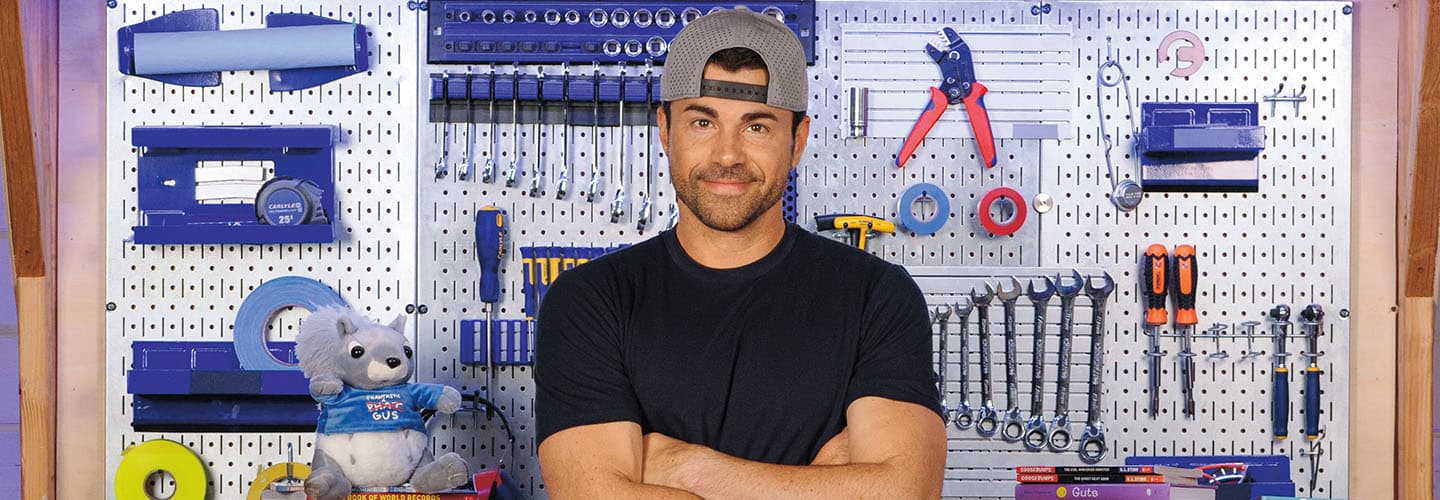

A man stands with arms crossed in front of a pegboard wall covered with organized tools

Courtesy Mark Rober

Standards

How’d He Do That?!

Mark Rober wows the world with wacky experiments that supercharge science. 

What Is Engineering?
Watch a video to learn about an engineer’s design process.

The world’s largest Super Soaker. A pool filled with gelatin. A 250-foot-tall explosion of green foam. Unusual experiments like these have made Mark Rober one of YouTube’s biggest stars. His videos have been viewed nearly 18 billion times.

As a kid, Rober was curious about the way things work. He loved solving problems, even if it took many attempts.

“I grew up in a family where we were always encouraged to try new things,” Rober says. “I realized you could use creative problem-solving to totally hack everyday life.”

In 2004, Rober got a job as an engineer at NASA, the U.S. space agency. He helped design the Curiosity rover, a car-sized wheeled robot that has been exploring Mars since 2012. 

While at NASA, Rober got an idea. He would show the world how amazing engineering can be with videos that push science to the next level. 

“By making the science wacky and extreme, it proves that engineering isn’t just about formulas in a textbook,” Rober says. “It’s about having the imagination to build something mind-blowing. Boom!”

Over the past 15 years, Rober has posted more than 260 videos. Here’s a look at his process. 

The world’s biggest Super Soaker. A pool filled with gelatin. A 250-foot-tall blast of green foam. These are some of Mark Rober’s unusual experiments. They’ve helped make him a star on YouTube. His videos have been viewed nearly 18 billion times.

As a kid, Rober liked learning about how things work. He loved solving problems, even if it took many tries.

“I grew up in a family where we were always encouraged to try new things,” Rober says. “I realized you could use creative problem-solving to totally hack everyday life.”

In 2004, Rober became an engineer at NASA, the U.S. space agency. He helped design the Curiosity rover. That’s a car-sized robot that has been exploring Mars since 2012. 

While at NASA, Rober had an idea. He wanted to show the world how amazing engineering can be. He started making videos that pushed science to the next level. 

“By making the science wacky and extreme, it proves that engineering isn’t just about formulas in a textbook,” Rober says. “It’s about having the imagination to build something mind-blowing. Boom!”

Over the past 15 years, Rober has posted more than 260 videos. Here’s a look at his process.

Courtesy Mark Rober

Mark Rober

1. Ask questions. 

Shutterstock.com 

Rober’s experiments often begin with finding a problem to solve. Sometimes that problem shows up right in his backyard (see “Man vs. Squirrels”) or outside his front door.

For example, when someone stole a package from his porch, Rober wanted revenge. But how would he get it? Then it hit him—he’d get payback by leaving future thieves a package that contained a messy, smelly surprise called a glitter bomb! 

Rober’s projects often start with finding a problem to solve. Sometimes that problem shows up right in his backyard (see “Man vs. Squirrels”). Or it might be outside his front door.

One time, someone stole a package from his porch. Rober wanted revenge. But how would he get it? Then it hit him. He would leave future thieves a special package. It would contain a messy, smelly surprise called a glitter bomb!  

2. Build a model.

Once Rober had the idea, he got to work bringing it to life. First, he sketched out what the package would look like. Not only would it spray glitter on anyone who opened it, but the box would blast stinky fart spray too! Rober also wanted to be able to track the package and take a video of the thief. So he and a friend worked on a prototype.

Once Rober had the idea, he got to work. First, he sketched out what the package would look like. The box would spray glitter on anyone who opened it. It would blast stinky fart spray too! Rober wanted to have a way to track the package. He also wanted to take videos of the thief. So he and a friend worked on a prototype.

Courtesy Mark Rober

Mark Rober’s glitter bomb videos are some of his most popular, with nearly 600 million total views.

3. Make mistakes.

Did we mention that Rober spent six months building and testing his glitter bomb? He was never discouraged by his setbacks. He knows that every mistake shows him what needs to be fixed next.

“In engineering, failure isn’t just common—it’s a requirement!” Rober says. “When we build things like the glitter bomb, the first version never works perfectly.”

Did we mention that Rober spent six months on his glitter bomb? That included building and testing it. He wasn’t bothered by his setbacks. Every mistake showed him what needed to be fixed next.

“In engineering, failure isn’t just common—it’s a requirement!” Rober says. “When we build things like the glitter bomb, the first version never works perfectly.”

4. Fix it!

Over time, Rober made six versions of his glitter bomb, each better than the previous one. The final version had the most powerful glitter explosion—and worked better than he had first envisioned it would. Many thieves fell for the bait!

Rober says you don’t need a fancy NASA lab to be a scientist.

“Grab some cardboard, some tape, and just start building,” he advises. “The world needs your unique ideas to solve the big problems of tomorrow.”

Over time, Rober made six versions of his glitter bomb. Each was better than the previous one. The final version had the most powerful glitter blast. It worked better than he had first imagined. Many thieves fell for the bait!

Rober says you don’t need a fancy NASA lab to be a scientist.

“Grab some cardboard, some tape, and just start building,” he says. “The world needs your unique ideas to solve the big problems of tomorrow.”

Man vs. Squirrels

The problem? Squirrels were breaking into Mark Rober’s bird feeder and stealing the birdseed. The solution? Rober spent weeks creating an epic obstacle course to keep the sneaky squirrels away. The result? Not what Rober expected!

The problem? Squirrels were breaking into Mark Rober’s bird feeder and stealing the birdseed. The solution? Rober spent weeks creating an epic obstacle course to keep the sneaky squirrels away. The result? Not what Rober expected!

Courtesy Mark Rober

Courtesy Mark Rober

The first challenge was a wobbly rope bridge. The squirrels figured out they could jump right over it! Then came a maze and other obstacles, including a Slinky bridge.

The first challenge was a wobbly rope bridge. The squirrels figured out they could jump right over it! Then came a maze and other obstacles, including a Slinky bridge.

Courtesy Mark Rober

There was even a photo opportunity. If a squirrel stuck its head through this painting, a camera snapped a picture.

There was even a photo opportunity. If a squirrel stuck its head through this painting, a camera snapped a picture.

Courtesy Mark Rober

After about a week, the squirrels could finish the course in less than 40 seconds. Rober couldn’t outsmart them, so instead he built them a tiny picnic table stocked with their favorite snack, walnuts. 

After about a week, the squirrels could finish the course in less than 40 seconds. Rober couldn’t outsmart them, so instead he built them a tiny picnic table stocked with their favorite snack, walnuts. 

1. Based on the article, what does Mark Rober hope to accomplish with his YouTube videos?

2. How does Rober view mistakes?

3. What is the purpose of the sidebar, “Man vs. Squirrels”?

1. Based on the article, what does Mark Rober hope to accomplish with his YouTube videos?

2. How does Rober view mistakes?

3. What is the purpose of the sidebar, “Man vs. Squirrels”?

videos (2)
videos (2)
Skills Sheets (3)
Skills Sheets (3)
Skills Sheets (3)
Games (1)
TEACHER SUPPORT (1)
Leveled Articles (1)
Text-to-Speech