
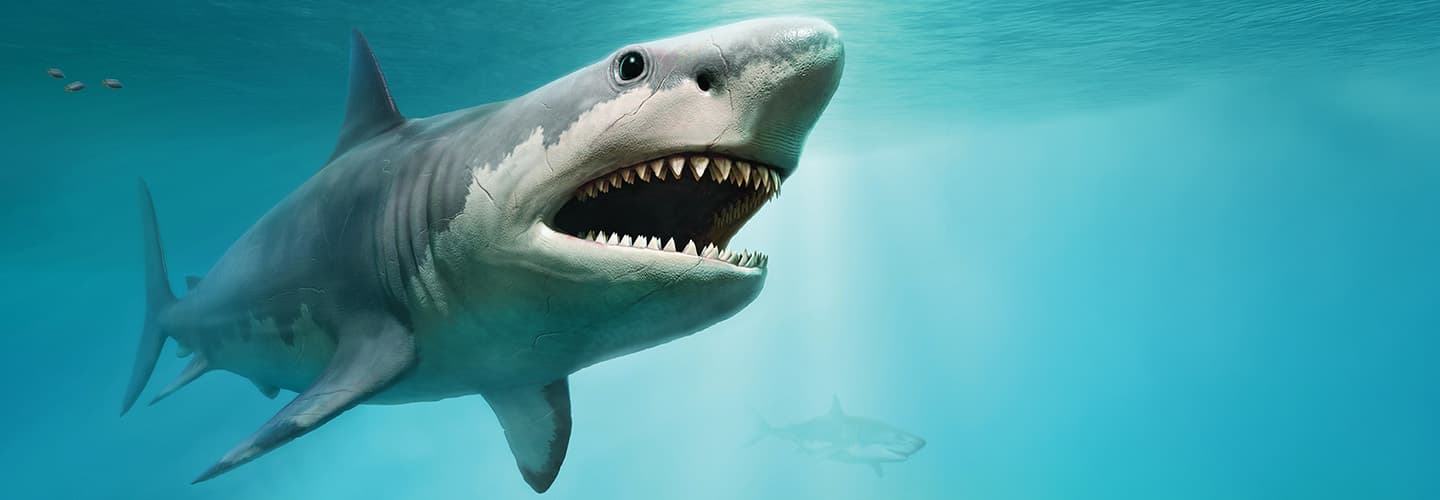

A large shark swims with its mouth open, rows of teeth visible, in clear blue water

iStockPhoto/Getty Images (megalodon); Shark fossil illustrations by Kate Francis

Standards

A Supersized Symbol

The biggest shark that ever lived is now a state symbol in Maryland.

Jim McMahon/Mapman®

On a chilly morning in March, Jaxon Hinton was walking along the shore of the Chesapeake Bay in Maryland. Suddenly, he spotted a pointy object sticking out of the wet sand. It was a tooth that once belonged to a giant prehistoric shark called a megalodon. 

Jaxon has found dozens of smaller megalodon fossils around the bay over the past few years. But this tooth is his biggest fossil find so far. It’s nearly the size of his hand!

“It’s really special to me because it’s super hard to find one this size,” says Jaxon, who’s now 11 and in sixth grade. 

In April, he got another reason to be excited about the mighty megalodon. Lawmakers in Maryland voted to make it a state symbol. Maryland is the first state to have its own official shark.

It was a chilly morning in March. Jaxon Hinton was walking by the shore of the Chesapeake Bay in Maryland. Suddenly, he saw a pointy object in the wet sand. It was a tooth that once belonged to a megalodon. That’s a giant prehistoric shark. 

Jaxon has found dozens of smaller megalodon fossils over the years. But this tooth is his biggest fossil find so far. It’s nearly the size of his hand!

“It’s really special to me because it’s super hard to find one this size,” says Jaxon. He’s now 11 and in sixth grade. 

In April, he got another reason to be excited about the megalodon. Lawmakers in Maryland voted to make it a state symbol. Maryland is the first state to have its own official shark.

What You Need to Know About Sharks
Watch a video to learn more about these essential ocean animals.

Powerful Predators

Megalodons ruled Earth’s oceans before becoming extinct about 3.6 million years ago. They were the biggest sharks that ever lived. Scientists estimate that these enormous fish could have grown to be as long as 80 feet. That’s about the length of two school buses in a row. 

Because of their size, megalodons likely had huge appetites. They feasted on ancient whales, dolphins, and seals. Scientists think the sharks surprised their prey by attacking from below.

Like today’s great white sharks, megalodons were apex predators, or animals at the top of their food chain. 

“Without sharks, the ocean ecosystem would become unbalanced,” says Stephen Godfrey. He’s a paleontologist at the Calvert Marine Museum in Maryland. 

By feeding on sea creatures, Godfrey explains, megalodons kept the populations of those animals from growing too large.

Megalodons became extinct about 3.6 million years ago. Before then, they ruled Earth’s oceans. They were the biggest sharks ever. According to scientists, these huge fish could have grown to be 80 feet long. That’s about the length of two school buses in a row. 

Because of their size, megalodons likely had huge appetites. They ate ancient whales, dolphins, and seals. Scientists think the sharks surprised their prey by attacking from below.

Like today’s great white sharks, megalodons were apex predators. Those are animals at the top of their food chain. 

“Without sharks, the ocean ecosystem would become unbalanced,” says Stephen Godfrey. He’s a paleontologist at the Calvert Marine Museum in Maryland. 

By feeding on sea creatures, Godfrey says, megalodons kept the populations of those animals from growing too big.

Courtesy of family 

Jaxon Hinton holds the megalodon tooth he found in March.

Terrifying Teeth

It’s no surprise that megalodons had megasized teeth. The biggest measured about 7 inches—roughly the length of an unsharpened pencil. The teeth had jagged edges like a saw’s, enabling the shark to easily slice into the flesh of its prey. 

Much of what scientists know about megalodons comes from studying their teeth. Sharks’ skeletons are made of cartilage. It’s much like the soft tissue in your outer ears and the tip of your nose. Cartilage doesn’t turn into fossils the way bones do. So, unlike dinosaurs, megalodons left no skeletons. But their fossilized teeth have survived (see “How Did Shark Fossils Form?”).

Scientists think megalodons went through thousands of teeth in their lifetime. They constantly grew new teeth as old ones fell out, just as modern sharks do. 

Megalodon teeth have been found on every continent except Antarctica. In the United States, they’re often found on beaches along the east and west coasts. Millions of years ago, much of what is now coastal Maryland was covered by seawater.

It’s no surprise that megalodons had megasized teeth. The biggest were about 7 inches. That’s roughly the length of an unsharpened pencil. The teeth had jagged edges like a saw’s. They enabled the shark to easily slice into its prey. 

Much of what scientists know about megalodons comes from studying their teeth. Sharks’ skeletons are made of cartilage. It’s much like the soft tissue in the tip of your nose. Cartilage doesn’t turn into fossils the way bones do. So, unlike dinosaurs, megalodons left no skeletons. But their fossilized teeth have survived (see “How Did Shark Fossils Form?”).

Scientists think megalodons had thousands of teeth in their lifetime. They constantly grew new teeth as old ones fell out. Today’s sharks do the same. 

Megalodon teeth have been found on every continent except Antarctica. In the United States, they’re often found on beaches along the east and west coasts. Millions of years ago, what is now coastal Maryland was mostly covered by seawater.

A Mega Honor

Officials at the Calvert Marine Museum came up with the idea for Maryland to honor the megalodon. While doing research, Godfrey discovered that no state had an official shark. He thought, Why not honor the biggest shark of all time? 

“When you think of why we have symbols for states, you want to choose ones that people remember,” he explains. 

Godfrey helped draft the law that made the megalodon Maryland’s newest state symbol. He hopes it will inspire people to learn more about the importance of sharks. 

Jaxon, for one, is thrilled about his home state’s new symbol. 

“There are so many other sharks that could have been picked, but it’s really cool that it was the megalodon,” he says.

Officials at the Calvert Marine Museum had the idea for Maryland to honor the megalodon. While doing research, Godfrey learned that no state had an official shark. He thought, Why not honor the biggest shark of all time? 

“When you think of why we have symbols for states, you want to choose ones that people remember,” he explains. 

Godfrey helped write the law that made the megalodon Maryland’s newest state symbol. He hopes it will inspire people to learn more about sharks. 

Jaxon, for one, is happy about his home state’s new symbol. 

“There are so many other sharks that could have been picked, but it’s really cool that it was the megalodon,” he says. 

How Did Shark Fossils Form?

1. Millions of years ago, a shark died. Its body sank to the ocean floor.

1. Millions of years ago, a shark died. Its body sank to the ocean floor.

2. The body was covered by sand and mud, which turned to rock over many thousands of years.

2. The body was covered by sand and mud, which turned to rock over many thousands of years.

3. Meanwhile, the shark’s cartilage broke down. Over time, minerals seeped into the teeth and hardened them into fossils.

3. Meanwhile, the shark’s cartilage broke down. Over time, minerals seeped into the teeth and hardened them into fossils.

4. Slowly, the land shifted, creating a new coastline. The rocky areas around the fossils wore away—allowing them to be discovered!

4. Slowly, the land shifted, creating a new coastline. The rocky areas around the fossils wore away—allowing them to be discovered!

1. What does the author of the article mean when she writes that megalodons once “ruled Earth’s oceans”?

2. Why is it that much of what scientists know about megalodons comes from studying their teeth?

3. How did the megalodon come to be a Maryland state symbol?

1. What does the author of the article mean when she writes that megalodons once “ruled Earth’s oceans”?

2. Why is it that much of what scientists know about megalodons comes from studying their teeth?

3. How did the megalodon come to be a Maryland state symbol?

videos (2)
videos (2)
Skills Sheets (3)
Skills Sheets (3)
Skills Sheets (3)
Games (1)
TEACHER SUPPORT (1)
Leveled Articles (1)
Text-to-Speech