
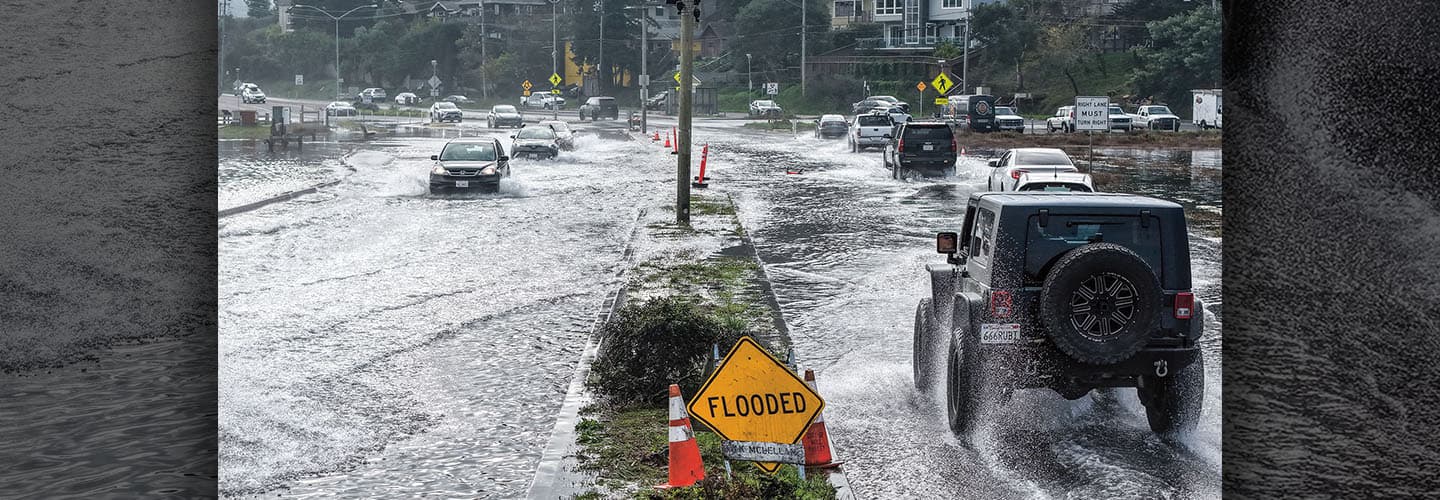

Vehicles drive through a flooded street with a yellow sign reading FLOODED in the foreground

Cars drive along a flooded street in Mill Valley, California, in December.

Justin Sullivan/Getty Images

Standards

Soaking It Up

When it rains, it pours. People across California were reminded of that saying as a series of severe storms battered the state in recent months. 

Powerful storms soaked most of California in late December, leading to widespread flooding and power outages. More storms arrived in mid-February, leaving large parts of Southern California underwater. Meanwhile, more than 5 feet of snow fell on the Sierra Nevada mountains over just a few days. The storm triggered an avalanche that buried skiers under a thick mass of ice and snow. Sadly, at least eight people were killed.

Rainy Relief

Despite the destruction, the wet weather did bring some relief to a state that has suffered from serious droughts in recent years. Those long periods with little precipitation put a strain on the water supply for California’s 39 million residents. Long dry spells also hurt the state’s farms, which grow most of the country’s supply of fruits and nuts.

Due to the recent storms, no part of the Golden State was experiencing a drought or “abnormally dry” conditions for the first time in 25 years. And the heavy snowfall helped increase the Sierra Nevada’s snowpack. California gets about 30 percent of its water from the melted snowpack, which helps fill rivers, streams, and human-made lakes called reservoirs. 

Still, meteorologists say it’s too soon to tell if California will remain drought-free. The state’s rainy season lasts until late March. In the meantime, experts are warning residents to be prepared for more wild weather.

Games (1)
Text-to-Speech