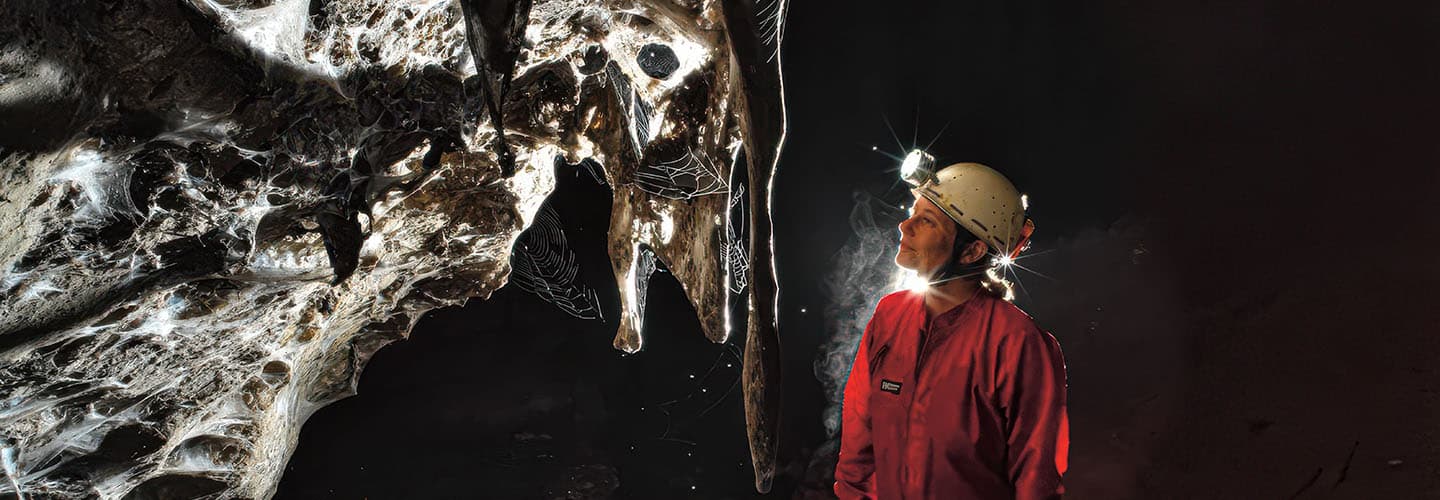
Los científicos descubrieron la cueva del Azufre en 2022. Observaron que dos especies de arañas: la araña tejedora de embudo y la araña tejedora de sábanas habían tejido la gigantesca telaraña. Normalmente, las arañas tejedoras de embudo se comen a las arañas tejedoras de sábanas, que son más pequeñas. Pero en la cueva del Azufre, las arañas más grandes no dependen de sus primas más pequeñas para alimentarse. Esto es porque la cueva está llena de innumerables moscas que quedan atrapadas en la gigantesca telaraña, lo que da a las arañas abundante comida.
“Para que se hagan una idea, comen el equivalente a una carretilla llena de comida todos los días”, dijo Sarbu.
La cueva también alberga otros seres de miedo, como ciempiés, escorpiones y murciélagos. Es raro que una cueva oscura esté repleta de vida. Lo que hace especial a la cueva del Azufre es el sulfuro de hidrógeno, un gas que huele a huevos podridos. Ese gas maloliente permite que pequeños organismos llamados microbios sobrevivan. Estos se vuelven en alimento para las moscas que las arañas terminan por engullir.
Sarbu dice que se alegra de que la cueva haya recibido tanta atención.
“La gente suele gritar cuando ve una araña —dice—. Es fascinante que la gente se alegre por esta enorme telaraña”.